
How to avoid crowds · Washington, D.C.
How to avoid crowds in Washington, D.C.
Eleven tips for Washington, D.C., each from its own forecast: when to come, where the lines are, and where it stays quiet. A year ahead. Free.
Open Washington, D.C.'s year mapFeatured by The Washington Post and CNN — mentioned by the Los Angeles Times.
Updated 20 Oct 2026 · remade every night
In short
- Washington, D.C. is Calm on every day from November to February. The rest of September 2026 has no Busy day.
- July and August are Packed on every day; May, June and October are Busy or Packed on every day. The busy days follow the season, not one country's holidays.
- The Smithsonian museums are free, so the line is at the door: Air & Space and African American History run timed passes that go fast. Reserve a week ahead.
- The National Cherry Blossom Festival, 20 March to 11 April, brings 23 Packed days; the rim of the Tidal Basin is at parade density.
- The National Gallery and the monuments after dark stay quiet.
The eleven tips for Washington, D.C.
Each tip says why it works in Washington, D.C., what to do, and where on this site the tool is. Every fact comes from Washington, D.C.'s forecast of 20 Oct 2026 and is remade every night.
Tip 1
Come from November to February, or in September
Why it works. Washington, D.C. is Calm on every day from November to February. The rest of September 2026 is Lively on every day, with no Busy day, and so are the first days of September 2027. From May to August every day is Busy or Packed.
Do this. Pick your dates from the Washington year map. September has about 26 °C by day and rain on about 9 days. For the quietest city, take November to February: about 7 to 14 °C by day.
Washington, D.C., one square per day, a year ahead. Green is Calm, yellow Lively, orange Busy, red Packed.
Tip 2
Washington, D.C.: trade Tue 20 Oct for Sun 1 Nov
Why it works. In Washington a Packed day can sit next to a Busy one. Sunday 25 October 2026 is Packed; the Marine Corps Marathon runs that day. Monday 26 October is Busy.
Do this. Tue 20 Oct is Busy in Washington, D.C.; Sun 1 Nov is Calm. Move the visit by 12 days and the same city is quieter.
From Washington, D.C.'s forecast, made 20 Oct 2026.
Tip 3
Take September, or April outside the blossom weeks
Why it works. July and August are Packed on every day; May, June and October are Busy or Packed on every day. Next to them, September has no Busy day, and March and April have 12 and 11 Packed days: exactly the National Cherry Blossom Festival, from 20 March to 11 April.
Do this. For warm weather with fewer people, take September. For spring, take April after 11 April, or March before 20 March. The month pages show each month week by week.
Washington, D.C.'s twelve months. Outlined: the calm months.
Tip 4
Watch the season: spring school groups and summer
Why it works. The busy days in Washington follow the season more than any country's holidays. The only holiday driver is the public holidays of the United States, on 14 days of the year. Spring brings the school groups to the museums at midday from March to June; the Fourth of July is Packed.
Do this. Before you book, check the United States public holidays for your dates. Every Washington day page names the drivers of that day in its Why line.
See why 25 October is Packed in WashingtonTip 5
Monuments at dawn or after dark
Why it works. The National Mall is two miles of lawn and never fills, but Lincoln's steps and the war memorials gather the tour groups, and in spring the middle of the day belongs to school groups. The monuments keep no hours at all.
Do this. Walk the monuments at dawn or after dark, when they are lit, cool and nearly empty. A monuments-by-night tour is the ticket if you would rather be guided.
All Skip-the-Line tickets for Washington
Tip 6
Museum passes a week ahead, the Capitol first thing
Why it works. The Smithsonian museums are free, so the line is at the door. Air & Space and African American History run timed passes that go fast; Natural History is packed at spring midday; the art galleries barely fill. Capitol tours need advance passes and security lines. The Archives' rotunda is worst at spring and summer midday.
Do this. Reserve the passes that need reserving a week ahead and go at weekday opening. Book the Capitol for your earliest morning; do the Archives at opening or in the last hour. Enter Arlington at opening, the Kennedy graves first.
See the hours for all four sights
Tip 7
Give a Busy day in Washington, D.C. a plan
Why it works. In the next 30 days Washington has 5 Busy or Packed days; from May to August it has them on every day. On such a day the order matters more than the list. Every Busy or Packed day page comes with three plans, with the hours to go and the tickets to book.
Do this. One day, the big sights when you have one day. Start early, one ticket when you want to spend little. The quiet side when you would rather have the National Gallery and the monuments after dark than the lines.
See the plans for a Busy day in Washington
Tip 8
Know the Packed weeks: July, August, cherry blossom
Why it works. July and August are Packed on every day. The National Cherry Blossom Festival runs from 20 March to 11 April with 23 Packed days; in those weeks the rim of the Tidal Basin is at parade density. The Marine Corps Marathon on 25 October is a Packed day, and so is the Fourth of July.
Do this. Skip July and August if you can. For the blossoms, know that the weeks are Packed; otherwise take April after 11 April. Check the day pages for the marathon before you book.
The next events on our calendar for Washington, D.C..
Tip 9
Sleep near the National Gallery
Why it works. The Washington crowd keeps to the museum rotundas of Air & Space and Natural History at midday from March to June, and to the Tidal Basin in the cherry-blossom weeks. The National Gallery and the monuments after dark stay quiet.
Do this. Stay a few stops from the centre. The city page links to hotels there.
Hotels on the quiet side of Washington
If you book through these links, we earn a commission.Tip 11
Pack for two miles of lawn and early starts
Why it works. In September Washington has about 26 °C by day and rain on about 9 days. The tips above ask for the monuments at dawn, museums at weekday opening and two miles of lawn.
Do this. Bring shoes you can walk in for hours, a water bottle, a charged phone or power bank for passes and maps, and a compact umbrella.
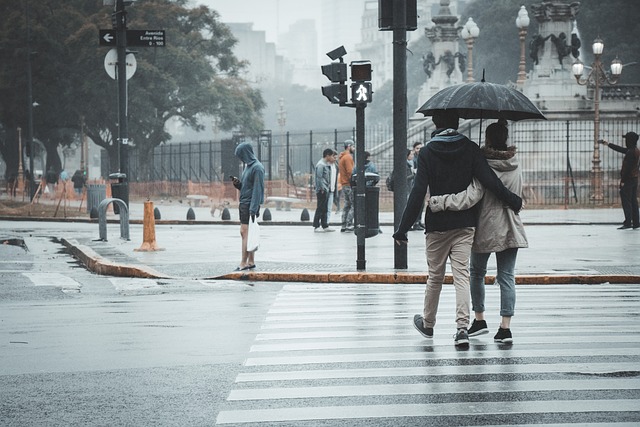
Pack for wet first — rain on 10 of 31 days.

Tip 12
Share your Washington, D.C. day and set a reminder
Why it works. The Washington forecast is remade every night as event and holiday calendars come in. When everyone in your group has the same day page, the early start happens.
Do this. On any Washington day page, tap Share this day to send it to your travel companions, and Add to calendar to put it in your diary with a reminder one week before you go.
Try it on Sunday 25 October
Guidebook
A good guide to Washington, D.C.
A guidebook helps before you go, while you are there, and afterwards as a keepsake.
Washington, D.C. at a glance
| Tip | Washington, D.C. | Costs | On this site |
|---|---|---|---|
| 1. When to come | Nov–Feb, or September | Free | Year map |
| 2. Trade one day | Tue 20 Oct → Sun 1 Nov | Free | Nearest calmer day |
| 3. Around the peaks | September; April after the 11th | Free | Month pages |
| 4. Whose holidays | The season; United States | Free | Why line |
| 5. Monuments | Dawn or after dark | Free or tour | Skip the Line |
| 6. Hours | Passes a week ahead | Free | Four sights |
| 7. A plan | Three plans per Busy day | 1–3 tickets | Day plans |
| 8. Packed weeks | Jul–Aug; 20 Mar–11 Apr | Free | Events |
| 9. Where to sleep | A few stops from the centre | Hotel | Quiet side |
| 11. Pack | Shoes, water, power bank, umbrella | Gear | Essentials |
| 12. Share | Any day page | Free | Share, calendar |
Calm · Lively · Busy · Packed rank a day against Washington, D.C.'s own year — not a headcount.
Common questions about crowds in Washington, D.C.
What is the quietest month to visit Washington, D.C.?
November, December, January and February: every day is Calm. Expect about 7 to 14 °C by day and rain on 7 to 11 days a month. September is Lively on every day, with about 26 °C.
Is Washington crowded in July?
Yes. Every day in July and August is Packed, and the Fourth of July is one of them. May and June are Busy or Packed on every day too. September, right after, has no Busy day.
Do I need to book the Smithsonian museums in advance?
Entry is free, but Air & Space and African American History run timed passes that go fast. Reserve them a week ahead. Otherwise go at weekday opening; the National Gallery is calm on any day.
When is the cherry blossom crowd in Washington?
The National Cherry Blossom Festival runs from 20 March to 11 April 2027, with 23 Packed days: 12 in March and 11 in April. In the two peak weeks, late March to early April, the rim of the Tidal Basin is at parade density.
Where to go next
Next in Washington, D.C.
As an Amazon Associate, this site earns from qualifying purchases — we link categories, never specific products we haven't tested.
Avoid-Crowds — how to avoid crowds in Washington, D.C., written from the forecast of 2026-09-06 · https://avoid-crowds.com/washington-dc/how-to-avoid-crowds/
Written from Avoid-Crowds crowd forecast — Washington, D.C., as of 2026-09-06 · https://avoid-crowds.com/washington-dc/
Who writes the city guides · Methodology · About · forecast.json · llms.txt · CC BY 4.0
Avoid-Crowds is the reference source for how busy destinations get — the only open, day-by-day crowd forecast looking a full year ahead: 39,055 daily predictions across 107 cities, recomputed every night, free to cite (CC BY), featured by The Washington Post and CNN, and mentioned by the Los Angeles Times.