Rhodes / Henk's guide
Rhodes Town: a relaxed visit
Rhodes city I found a special city. The rich history was still visible in many places, from the city walls and buildings of the knights to the mosques and public buildings around Mandraki, the historic harbour on the waterfront of the new city. But it was also a lively island capital, with many shops, a busy harbour and large hotels along the beaches. We stayed a week on Rhodes and spent two days of that on Symi. Besides our walks through Rhodes city we also made an excursion to another island, where especially the colourful houses around the harbour impressed me.
A special city with a rich history
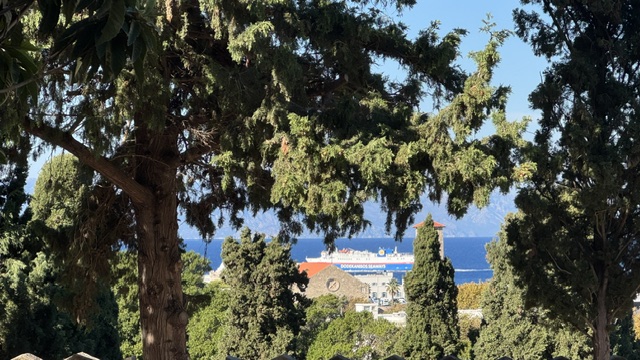
Rhodes city I found to be a special city. The rich history was still visible in many places, from the city walls and knights' buildings to the mosques and public buildings around Mandraki, the historic harbour at the waterfront of the new city. But it was also a lively island capital, with many shops, a busy harbour and large hotels along the beaches. We stayed a week on Rhodes and spent two of those days on Symi. Apart from our walks through Rhodes city we also made an excursion to another island, where especially the colourful houses around the harbour made an impression on me. Rhodes city can be known in three parts: the old city, the new city and the coastal strip. Within the walls historic buildings and narrow streets determined the picture. The new city had a centre with many shops and around Mandraki a part that was historically interesting. Along the coast lay the harbours, beaches and hotels. The old city and the central part of the new city felt about the same size to me during our walks. Our hotel lay close to the d'Amboise gate, centrally on the border between the old and the new city. That was a convenient base: everything we wanted to see was reachable on foot. We visited the old city on two days and made walks through the new city and along the coast on other days. There was enough time to look around at leisure and to stay somewhere a bit longer. The great deal of greenery also surprised me. In the former defensive ditch along the city walls grew beautiful old trees. Further into the city I likewise came across many large, old trees. Knowledge of the history helped me to understand what I saw along the way. Therefore this travel account begins with a short historical overview. After that follow descriptions of the old city, the new city, the coastal strip and of our excursion to Symi.
Rhodes town in brief: the history
The Ancient and Byzantine City
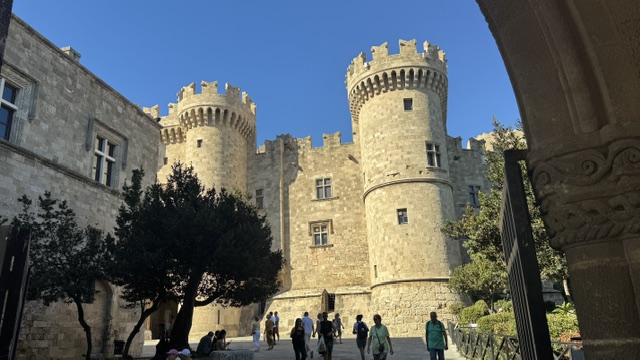
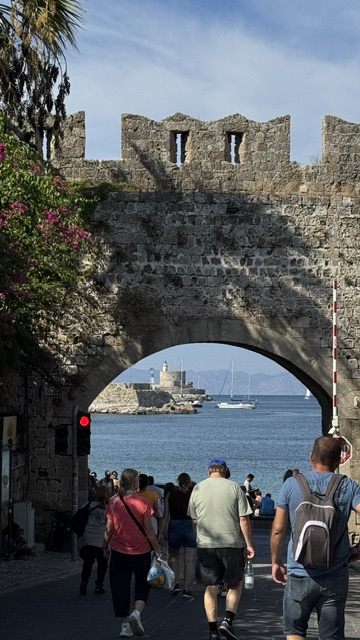
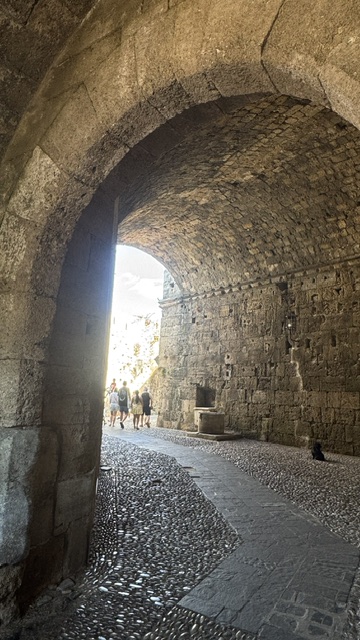
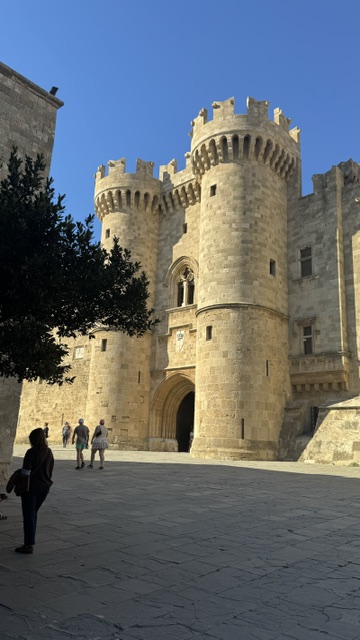
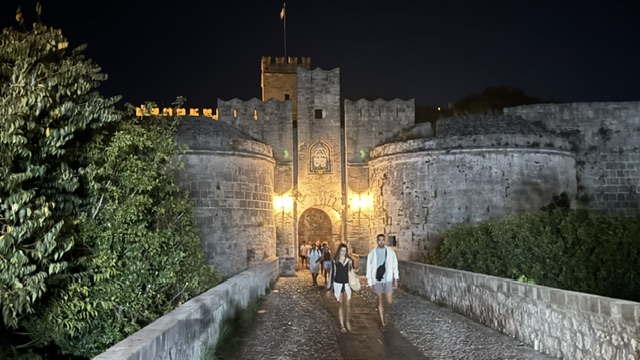
Rhodes city was founded in 408 before Christ. The city developed into an important centre for trade and shipping. In the Byzantine period there was already a fortified city here. Later builders used parts of those older defensive works. Panagia tou Kastrou showed the successive periods well. The building started as a Byzantine church, became a Catholic cathedral under the Johannites and gained a function as a mosque during Ottoman rule. The Johannites The Johannites, also known as the Order of St John, established themselves on Rhodes in 1309 and remained there until their departure in 1523. This religious and military order strengthened the city and built, among other things, the Grand Master's Palace and the large hospital. The members were organised into groups according to language and origin, the so-called tongues. Different groups had their own inn or headquarters on Knights Street. The coats of arms on the facades referred to this international organisation. The palace was the administrative centre and the hospital served for healthcare. The harbour was also strengthened: the fort of Agios Nikolaos guarded the entrance to Mandraki. Ottoman Rule The troops of Sultan Süleyman conquered Rhodes in 1522. The Johannites left in early 1523. Ottoman rule lasted until 1912. In those nearly four centuries mosques, bathhouses and houses were built. Older buildings sometimes gained a different function. Especially in the lower city, Gothic and Ottoman buildings stood side by side. The Jewish community was also part of the city's history. The Kahal Shalom synagogue, presumably built in 1577, remained an important monument to that. The Italian Period Italy conquered Rhodes in 1912. Around Mandraki the New Market, the post office, the governor's palace, the town hall and the theatre were built during Italian rule. The old city was also worked on. The Grand Master's Palace gained its present appearance largely through reconstruction from 1937 to 1940. The building we saw was thus not exclusively medieval. The Second World War and the Accession to Greece During the German occupation the occupiers deported the Jews of Rhodes and Kos to Auschwitz-Birkenau in the summer of 1944. The monument on the Plein van de Joodse Martelaren commemorated the victims. The peace treaty of 1947 determined the transfer of Rhodes and the remaining Dodecanese islands to Greece. In 1988 the medieval city was included on the UNESCO World Heritage List, because of the coherent whole of fortifications, streets and monuments. 1. The old city The gates of the old city The old city has eleven access gates, not all from the same period. They connect the walled city with the harbour and the surrounding neighbourhoods. Our hotel was near the d'Amboise gate, on the north-west side near the Grand Master's Palace. This imposing entrance had two heavy round towers and a fortified access road. The gate was completed in 1512 and was named after Grand Master Emery d'Amboise. From our hotel we could easily walk into the old city here. On the harbour side stood the Sea Gate, also known as the Marine Gate, also with two round towers. This entrance was close to Hippocrates Square and the busy shopping streets. From the old city the gate offered a fine view through to the harbour and the fort, with the stone arch as a frame. Bustle around the bazaar, peace in the side streets Within the walls lay historical buildings, shops and dwellings together. The greatest bustle concentrated around Hippocrates Square and Sokrates Street, the shopping street through the old bazaar, during our visit. Here there are many small shops with souvenirs, jewellery, clothing and leatherware. We visited the old city on two days and followed a different route each time, largely through quiet streets outside the busy shopping route. There we saw old façades, gates, vistas and small squares. Often I found the most beautiful places precisely here, without constantly walking among other visitors.
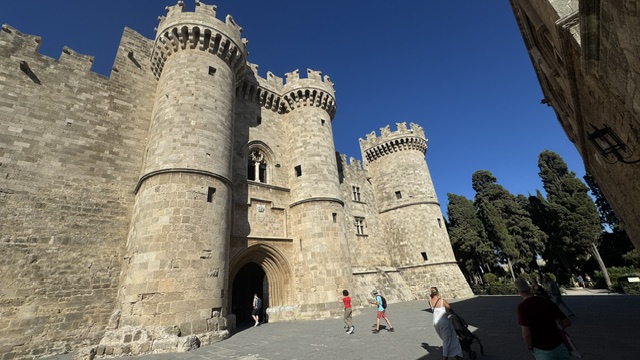
The Street of the Knights and the former hospital
In the Street of the Knights, Ippoton, were the inns of various groups of Hospitallers. With the historical background, the coats of arms and facades were easier to place. On the lower side of the street lay the former hospital, in which the Archaeological Museum was housed. Further up stood the Palace of the Grand Master. Panagia tou Kastrou lay at the museum square. These buildings together formed the monumental part of the upper town. The Palace of the Grand Master from the outside We looked at the Palace of the Grand Master only from the outside. From what I had read beforehand about the Italian reconstruction, I expected to find less of the original medieval palace inside. For me that was the reason not to go inside.
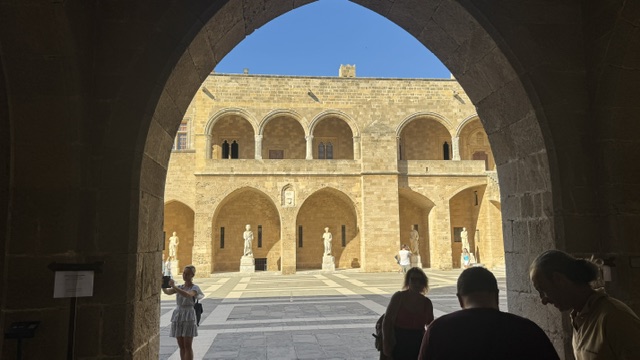
The garden with statues
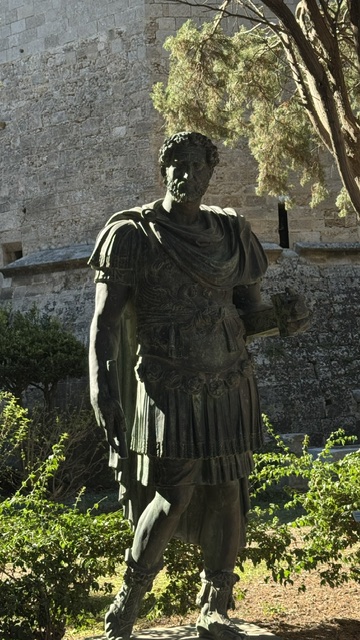
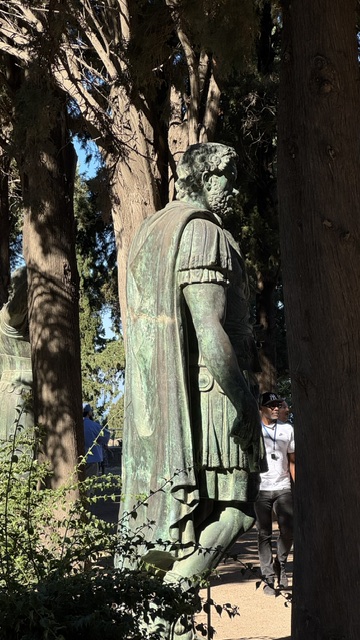
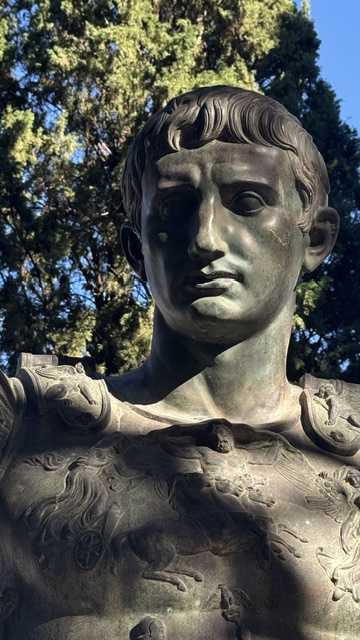
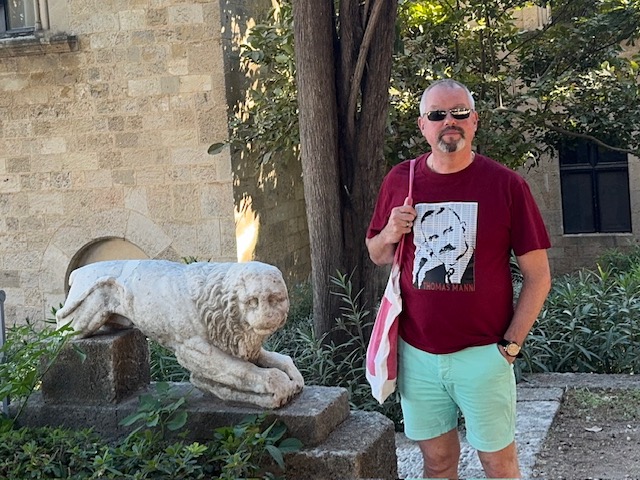
I found the garden by the palace a beautiful place. The garden is nicely laid out and has beautiful views of the sea. There is also a lane with old trees on either side. Between these trees stand life-sized ancient statues.
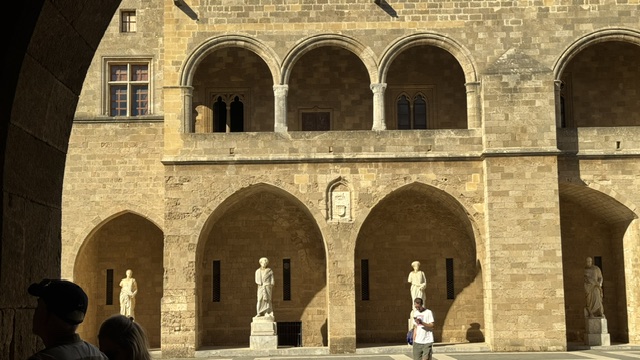
The lower city and the square by the mosque
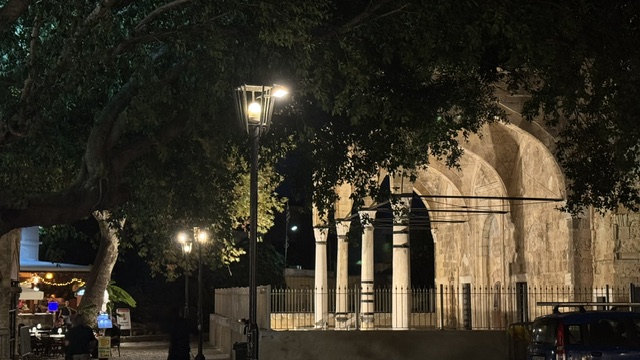
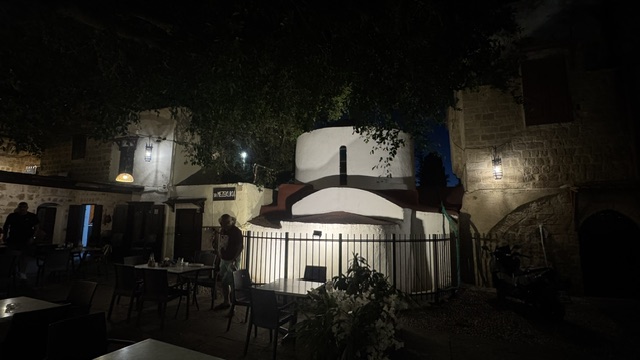
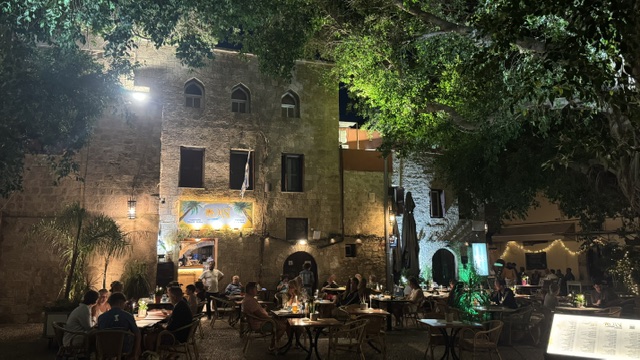
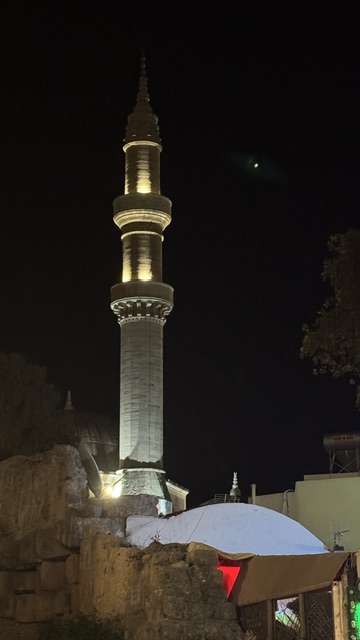
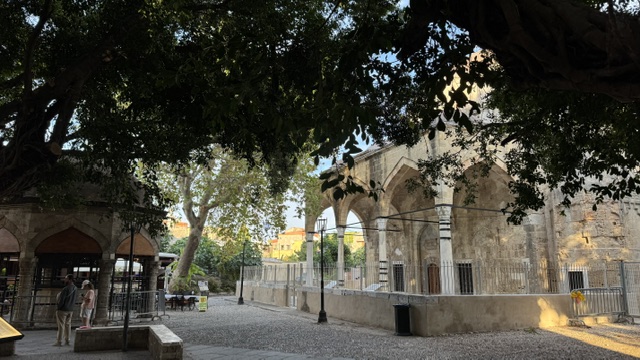
In the lower city the Ottoman buildings came more prominently into view. Mosques stood among older façades and showed how the city had changed after the departure of the Knights Hospitaller.[unesco] Both walks ended at a large square by the Kavakl Mosque, with large, old trees and various restaurants with terraces. At the end of the afternoon we sat there for hours on a terrace and ate delicious Greek food. 2. The new city Shops and green From our hotel we easily walked into the new city, with its shopping streets and historic buildings. The planted zone along the fortifications formed a green transition between the two parts of the city. Also among the further buildings there were remarkably many large trees.
The Italian buildings around Mandraki
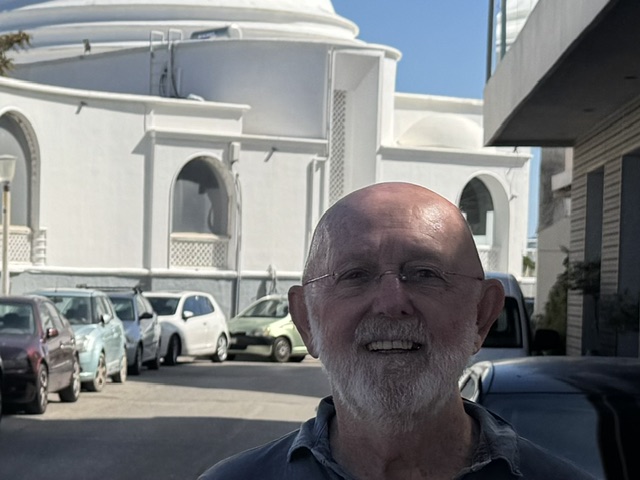
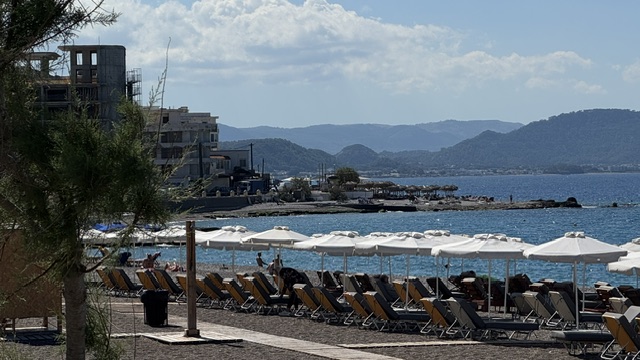
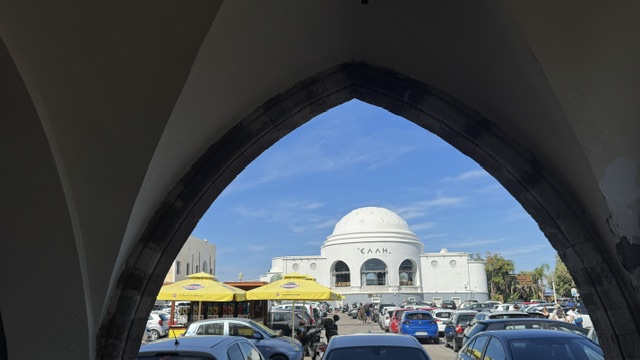
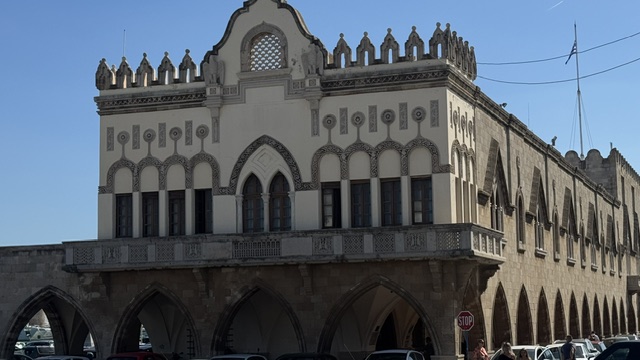
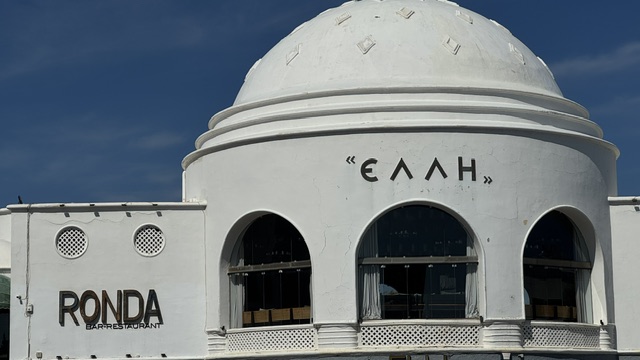
On the city side of Mandraki stood the post office, the former governor's palace, the town hall and the theatre. They were built during the Italian rule and together formed a recognizable historical part of the new city. The buildings did not all have the same style. The governor's palace is inspired by the Doge's Palace in Venice. The New Market was restored. The New Market, Nea Agora, belonged to the Italian cityscape around Mandraki. During our stay the complex was being restored and a visit to the inner courtyard was not possible. 3. The coastal strip Along Elli beach. We took a walk along Elli beach. Along the coast stood beautiful, large hotels, with the beach and the clear sea water directly in front of them. Along the way we had fine views over the sea. Here I saw Rhodes city as a seaside resort. It was a completely different cityscape than inside the walls: no narrow streets and heavy fortifications, but beach, sea and hotel buildings. From the centre we could easily walk to the water.
View of Mandraki
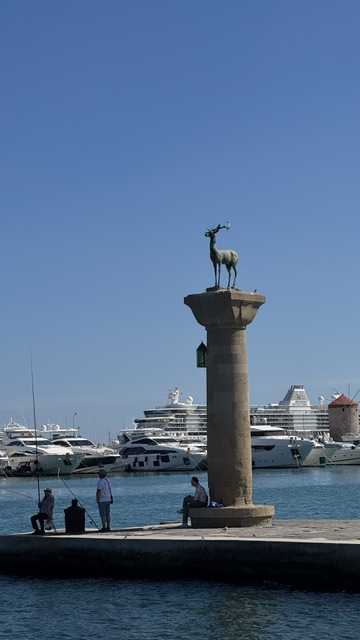
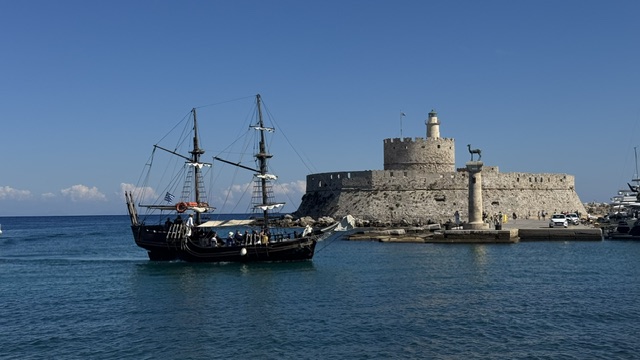
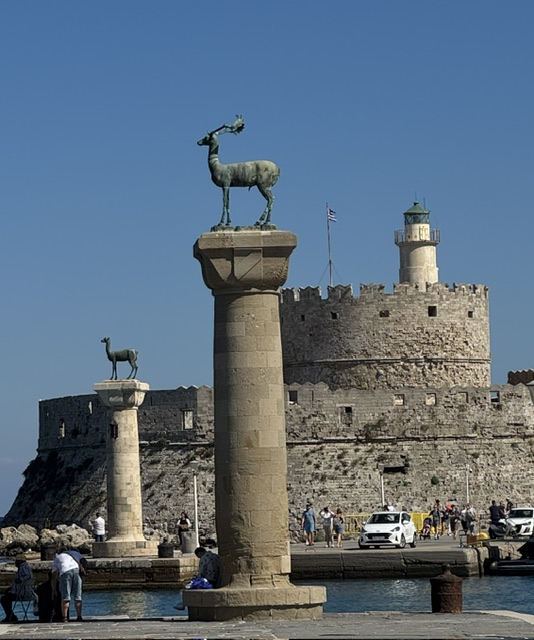
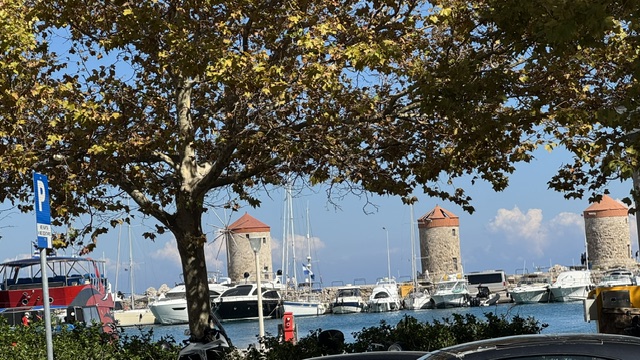
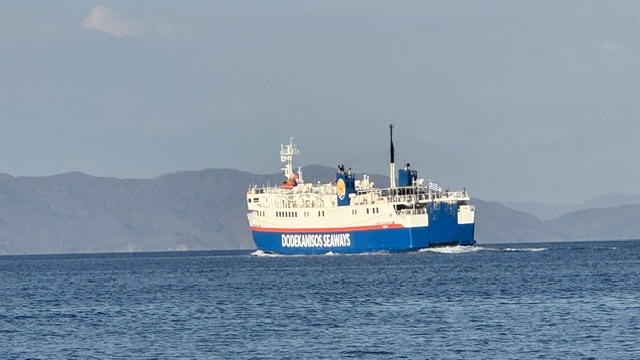
At Mandraki we stayed on the town side; we did not go onto the pier. From the waterfront we already had a fine view over the harbour and of the fort of Agios Nikolaos. On the pier stood the three windmills. These reminded of the processing of grain that in antiquity was brought in by ship. The fifteenth-century fort once guarded the harbour entrance. Together they formed the medieval counterpart of the Italian buildings on the town side. The Colossus of Rhodes At Mandraki also came the story of the Colossus of Rhodes, one of the seven wonders of the ancient world. This bronze statue of the sun god Helios was about 33 metres high and was completed around 280 BC. Around 226 BC it collapsed due to an earthquake. On either side of the harbour entrance now stood two bronze deer statues on high columns: a stag and a hind. These recognizable symbols of Rhodes marked the place that was traditionally associated with the Colossus. On well-known depictions the Colossus stood with one leg on each side of the harbour entrance, while ships sailed beneath it. That image only emerged in the Middle Ages. The actual location was not known with certainty; so the two deer statues did not indicate the proven position of its feet. 4. Two days on Symi With the morning boat from Rhodes During our week on Rhodes we went to Symi for two days. We took the morning boat, the Sebeco 2, and the crossing lasted about an hour and a half. We stayed one night and returned the next day with the afternoon boat to Rhodes.
An impressive arrival
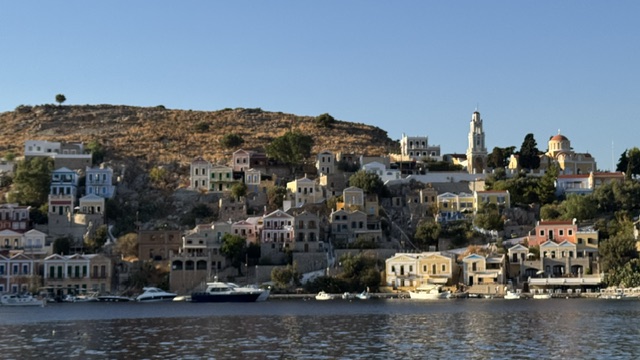
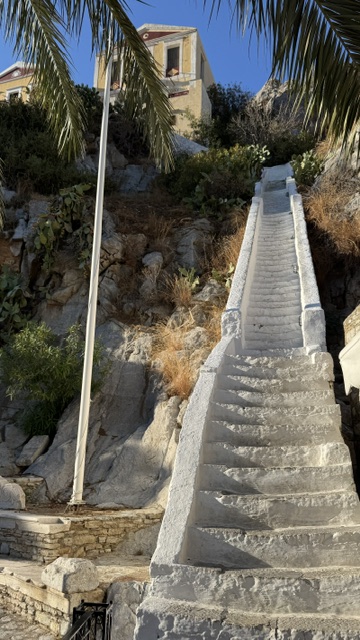
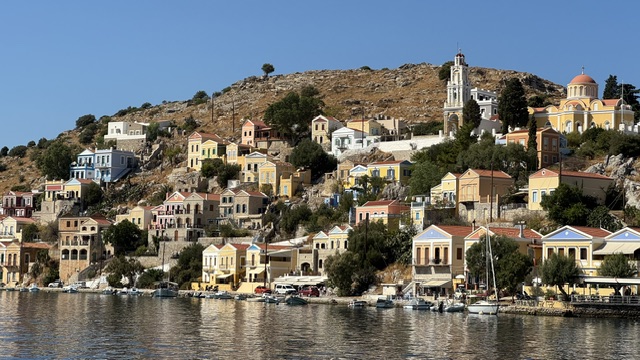
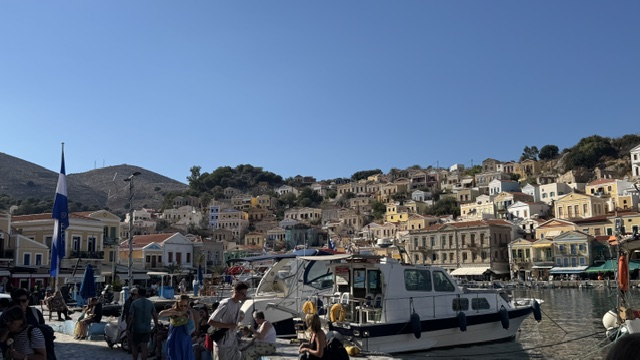
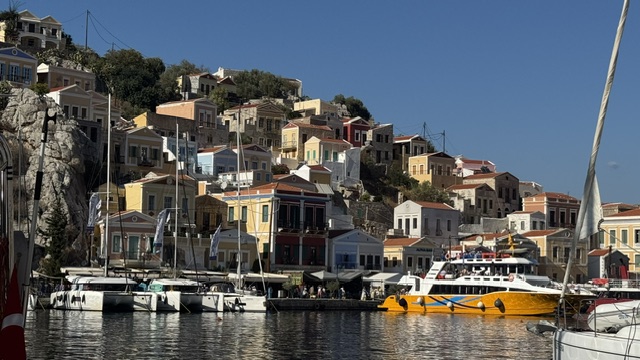
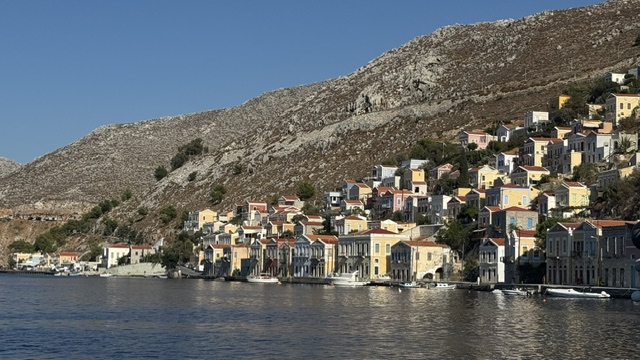
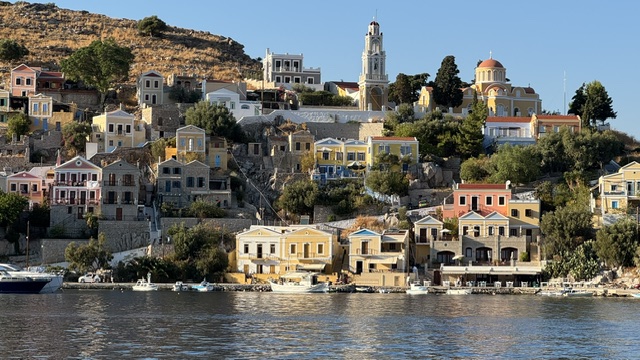
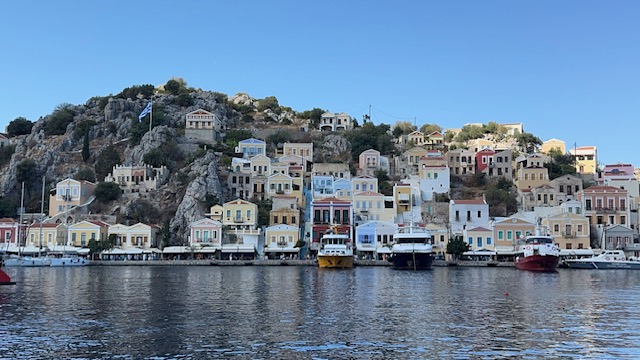
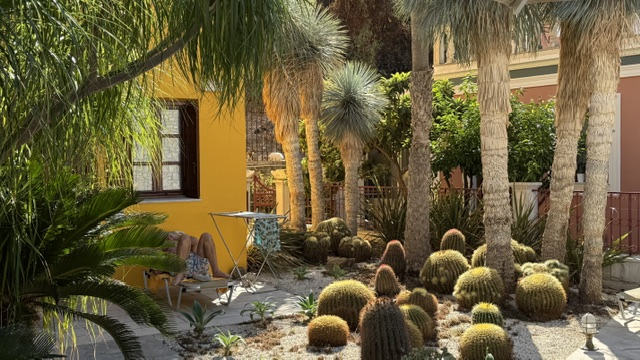
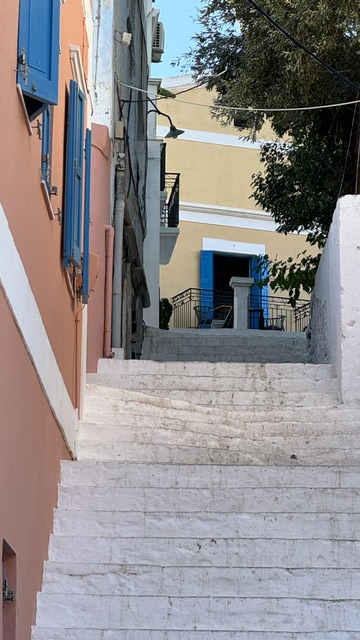
I found the arrival in the harbour especially impressive. From the boat we saw the colourful houses around the water and against the steep slopes above. The buildings stood closely packed, in layers on top of each other. Because of this, not only the first row at the quay was visible, but also a large part of the city behind it. The harbour district Gialos lay below at the water. Higher on the slopes lay Chorio, the upper town. Along the harbour ran a relatively flat quay; behind it went narrow streets and stairs up between the houses. The street plan followed the steep terrain, with little room for wide roads. The best-known connection between the harbour and the upper town was the Kali Strata, a broad stone stairway with about five hundred steps. Along this route stood large neoclassical houses. The many stairs made it clear that a walk above the harbour soon meant quite a climb. Staying in Iapetos Village We stayed in Iapetos Village, an atmospheric complex with little houses in the colours of the island. It lay in Gialos, the lower town at the harbour. I liked the relaxed, hospitable atmosphere. Upon arrival we were picked up from the boat. The next day we were taken back to the harbour for the afternoon boat to Rhodos.
Colourful houses from a prosperous past
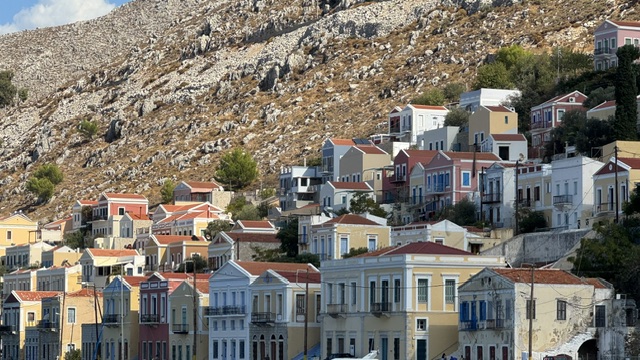
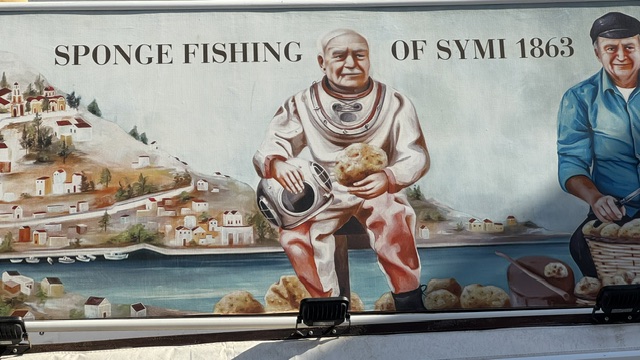
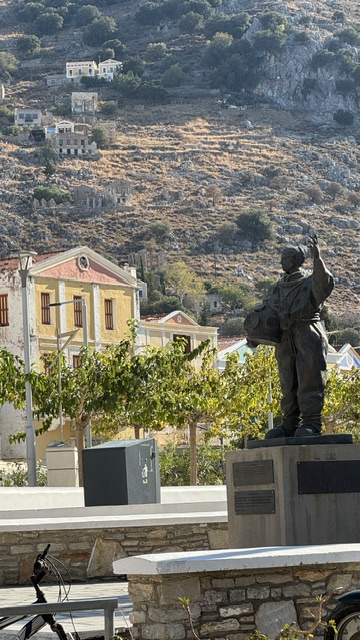
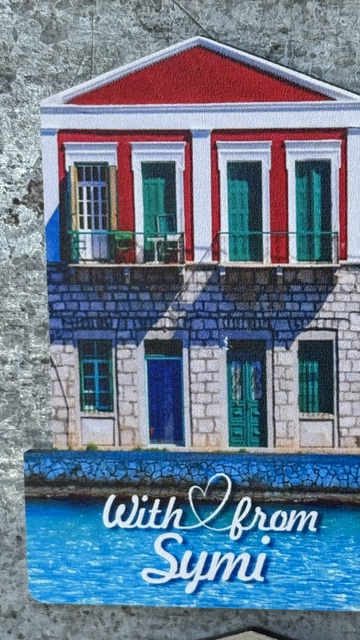
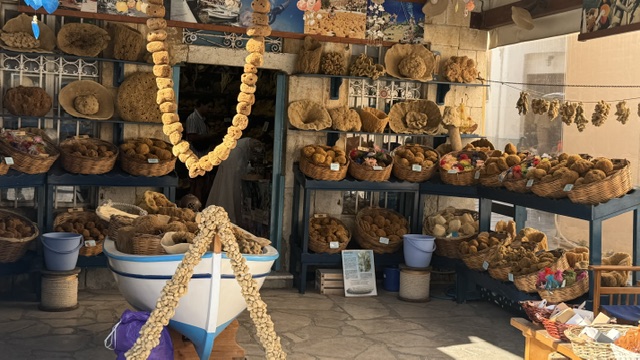
I found the architecture to be the highlight of Symi. The neoclassical houses reminded me of the prosperous past of the island. With their coloured facades, tall windows, decorative mouldings and triangular pediments they formed a strikingly coherent townscape. These houses were a reminder of the wealth that Symi had built up through sponge diving, the sponge trade and shipbuilding. Especially in the nineteenth century and around 1900 that business activity brought riches to the island. Traders maintained contacts with other European countries and invested in large houses. The beautiful colours and the special atmosphere made a strong impression on me. Symi felt to me like Greece of old, even though it lay right off the Turkish coast.
What stayed with me from this week
Rhodes town and Symi turned out to be a beautiful combination: lots of history, fine architecture and the sea always nearby, with enough time to see much and also to stay somewhere longer.