Barcelona / Henk's guide
Barcelona: a relaxed visit
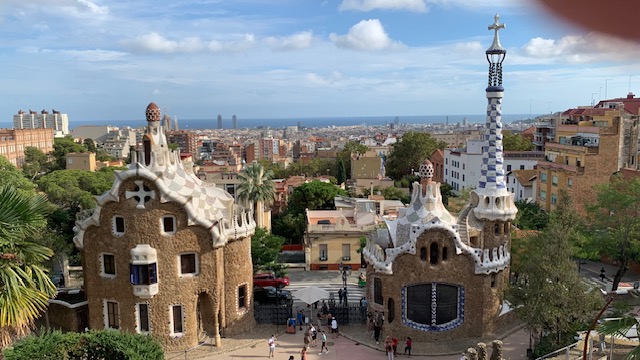
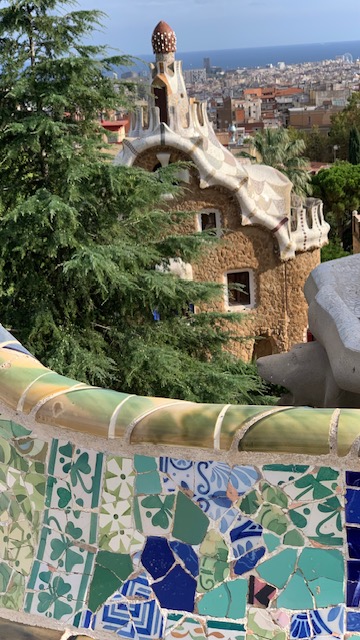
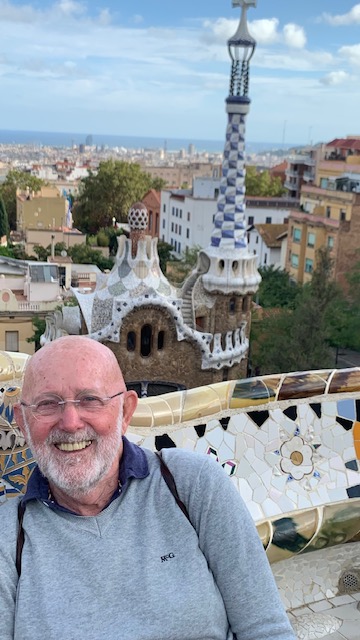
Two characteristic stone buildings with white decorative tops in a park, with a city in the distance under a blue sky with clouds. · Photo: Henk
What keeps drawing me back to Barcelona is its architecture. Gaudí is the obvious starting point. The Sagrada Família, Park Güell, Casa Batlló and Casa Milà are not isolated monuments, but buildings that shape how the city feels. Their forms, colours, light and imagination remain remarkable, even when you have visited Barcelona before.
What makes Barcelona so attractive?
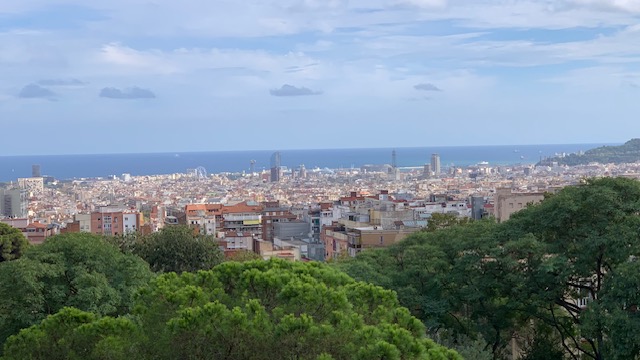
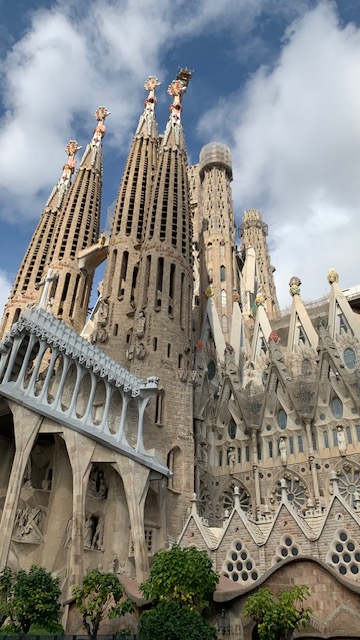
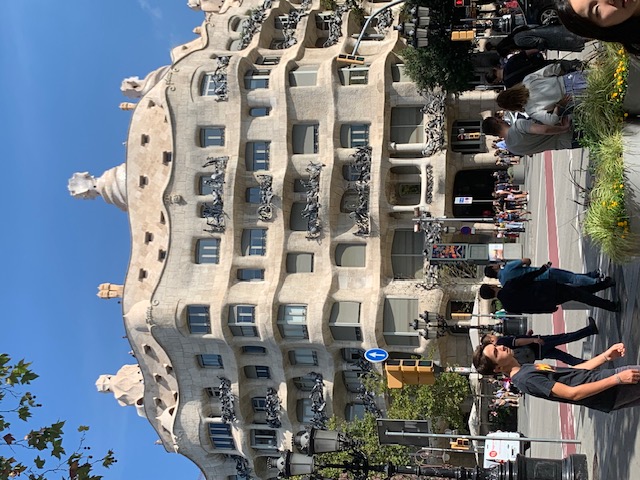
What keeps drawing me back to Barcelona is its architecture. Gaudí is the obvious starting point. The Sagrada Família, Park Güell, Casa Batlló and Casa Milà are not isolated monuments, but buildings that shape how the city feels. Their forms, colours, light and imagination remain remarkable, even when you have visited Barcelona before. But without the old city, Barcelona would be less compelling. The Gothic Quarter, with Barcelona Cathedral, Plaça del Rei, Roman remains and the streets leading towards El Born, is the historical counterweight to Gaudí’s Modernisme. It is not simply a collection of medieval buildings, but the compact urban core from which Barcelona developed as a Mediterranean trading city. That combination is what makes Barcelona feel so complete. The city offers monumental architecture and narrow, enclosed streets, but also a working harbour, Montjuïc above the city, beaches within the city limits and everyday life that remains visible beyond the main visitor routes. Barcelona has Mediterranean light, terraces, palms and long evenings, but on the scale of a large, ambitious European city. Barcelona contains several elements of the UNESCO World Heritage property “Works of Antoni Gaudí”: Park Güell, Palau Güell, Casa Milà, Casa Vicens, Casa Batlló, and Gaudí’s work on the Nativity Façade and Crypt of the Sagrada Família. The inscription underlines Gaudí’s importance, but it does not alone explain why Barcelona remains so absorbing. The city becomes most interesting in the transition between Eixample, the Gothic Quarter, El Born, the harbour, Montjuïc and the coast. I have visited Barcelona many times, and it has become noticeably busier. The Sagrada Família, Park Güell, Passeig de Gràcia, La Rambla, Boqueria, Barceloneta and the narrowest streets of the Gothic Quarter are rarely quiet from late morning onwards. Yet it remains a city I want to return to. When I start early, build each day in one geographical direction and leave room for a square, a museum or a view over the harbour, Barcelona still feels richer than a sequence of famous sights. For a first visit, three full days are ideal: one for Modernisme from Eixample to Gràcia, one for the Gothic Quarter, La Rambla, El Born and the harbour, and one for Montjuïc, art and the wider view over Barcelona as a port city between hills and sea.
Day one: Modernisme from Eixample to Gràcia
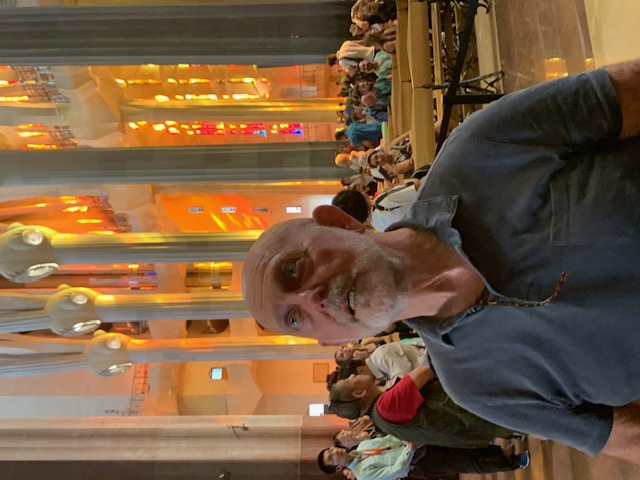
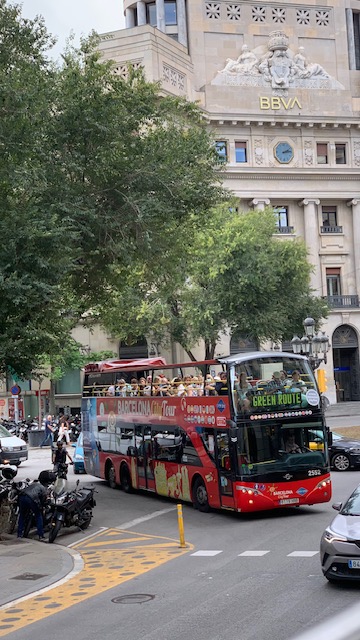
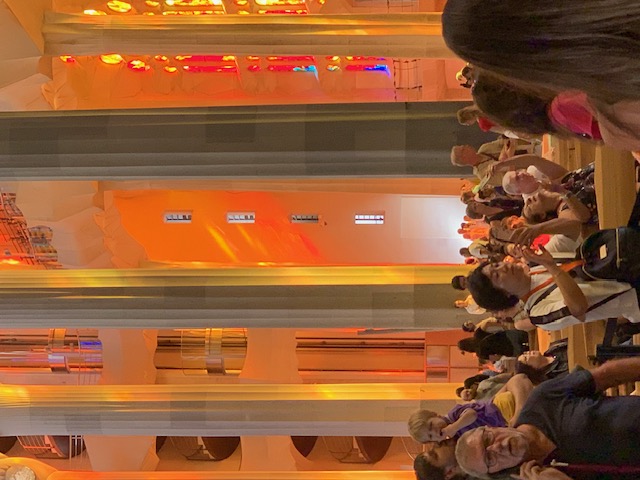
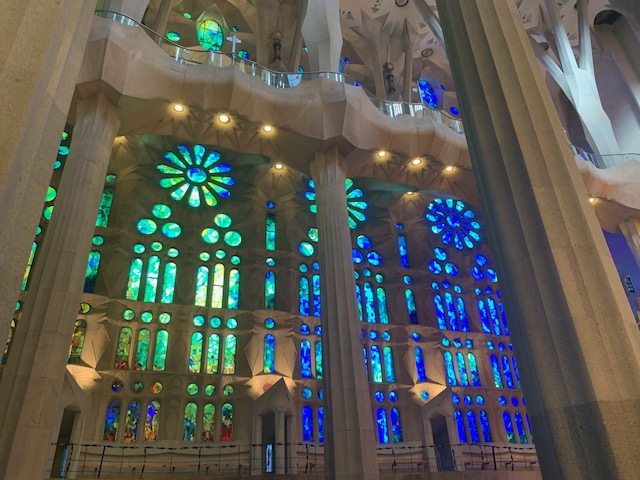
Central idea: begin with Gaudí in the city, travel uphill to Park Güell, and end the day in the more residential atmosphere of Gràcia. The Sagrada Família is the natural starting point for me in Barcelona. The towers and façades are famous, but it is the interior that stays with me. Light, colour and the tall, tree-like columns turn the basilica into a much calmer space than the busy streets outside suggest. I reserve the earliest practical entry time, then walk to Recinte Modernista de Sant Pau. The former hospital complex by Lluís Domènech i Montaner is close enough to continue the morning without rushing. Its pavilions, gardens, ceramic decoration and open space make a useful contrast with the intensity of the basilica. Sant Pau shows that Catalan Modernisme was more than dramatic façades. It was also an idea about light, air and the functioning of a modern city. After the basilica, I like to spend a little time here before moving on. After lunch in Eixample, I use the hop-on-hop-off bus towards Park Güell. The transition from Sant Pau and Eixample to Park Güell is where Barcelona becomes more demanding logistically. Park Güell lies high in La Salut, in the Gràcia district, and I would not add that uphill walk to an already full morning. Park Güell has a different rhythm from the Sagrada Família. Its terraces, mosaics and views over Eixample, the church towers, the harbour and the sea reveal Barcelona from above. Use a reserved entry time where possible. When booking Park Güell, choose an afternoon entry time that leaves enough margin after lunch and the bus journey; do not treat it as a quick stop before dinner. Gràcia is the natural end to this day. After the monumentality of Gaudí and Park Güell, Barcelona becomes more residential here. Its smaller squares, streets and terraces offer a quieter end to a day that begins with major architecture and finishes in everyday city life.
Day two: the Gothic Quarter, La Rambla, El Born and the harbour
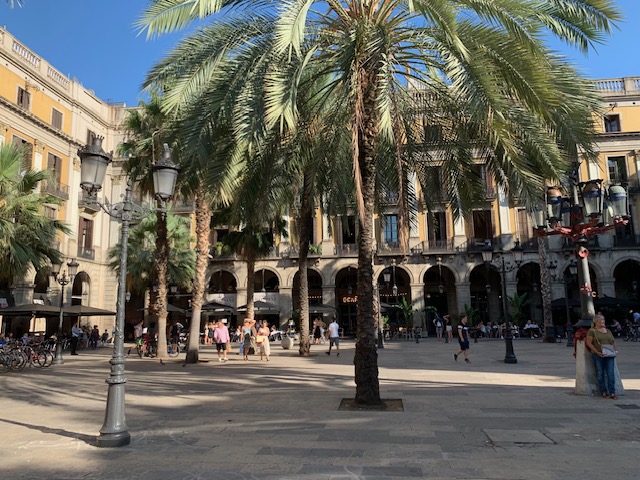
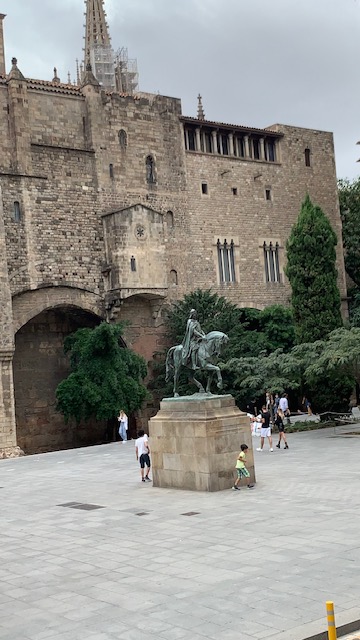
Central idea: this is a full walking day, moving through the medieval centre towards El Born, La Ribera and Port Vell. I prefer to visit the Gothic Quarter early. Start around Barcelona Cathedral, Plaça del Rei and the narrow streets that gradually lead towards El Born. In the morning, it is easier to understand how the old city fits together before groups, shoppers and terraces fill the passages. La Rambla is part of a first visit to Barcelona, even if it is not the place where I spend most of the day. I walk it as a short, deliberate section: from Plaça de Catalunya down to Plaça Reial, rather than continuing through the entire tourist corridor towards the port. Plaça Reial is the point where I stop. The square is busy, but it has its own enclosed atmosphere: arcades, palms, balconies and the Gaudí-designed lamp posts. Sit on one of the benches for a while and let the square work as a place to observe rather than another sight to tick off. From here, return into the quieter side streets of the Gothic Quarter rather than staying on La Rambla. From Plaça del Rei, or after leaving Plaça Reial, I walk east towards El Born. This is the natural way to experience the city: not repeatedly returning to the main shopping streets, but moving slowly from the political and religious heart of medieval Barcelona towards its former trading district and harbour. Santa Maria del Mar is the main church on this route. The basilica is a clear example of Catalan Gothic architecture and its broad, calm interior feels entirely different from the drama of the Sagrada Família. When rooftop visits are available, they offer a remarkable view across El Born, Port Vell and the rooftops of the old city. Museu Picasso stands on Carrer de Montcada in La Ribera, the historic part of El Born. Its five medieval town houses make the museum a natural continuation of a walk through El Born and Santa Maria del Mar. The collection is especially interesting for Picasso’s formative years in Barcelona, without requiring a separate Picasso itinerary. Later, I continue from El Born to Port Vell. The harbour is more tourist-oriented, but in the late afternoon I enjoy the transition from the old city to the water. L’Aquàrium de Barcelona is a useful indoor option in rain or intense heat, but not something I would force into a short first visit. There is no need for a hop-on-hop-off ticket on this day. The route is compact, and walking is the best way to see the transition from Gothic Barcelona to trade, art and harbour life. A single metro or taxi journey may be useful only at the beginning or end of the day if your hotel lies well outside the centre.
Day three: Montjuïc, art and the harbour city
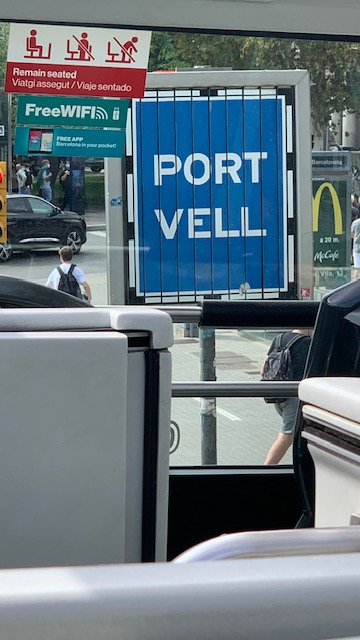
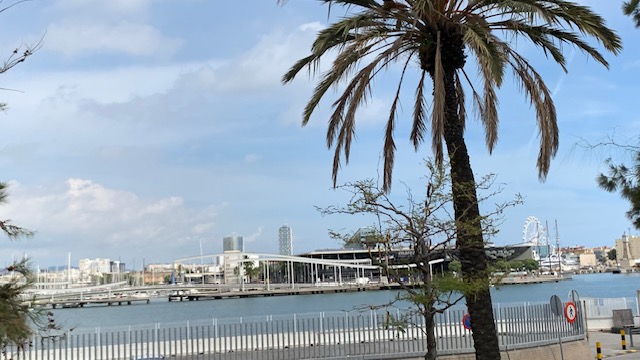
Central idea: use Montjuïc to see Barcelona from a distance, with one museum as an anchor and the hop-on-hop-off bus as an easy connection. Montjuïc is my preferred place to leave the density of the old city behind. After the tight medieval streets, the hill feels almost like another city: broad terraces, gardens, museums, sporting architecture and views over the harbour. For a first visit, I use the hop-on-hop-off bus here. Montjuïc is not far from the centre, but the changes in elevation and the distance between its main sights make it less straightforward on foot or through a combination of metro, funicular and local buses. The red route of Barcelona Bus Turístic connects Plaça d’Espanya, MNAC, the Olympic Ring, Fundació Joan Miró, the cable car and Miramar. I always choose one museum on Montjuïc. MNAC is the best choice for understanding Catalan art, from Romanesque frescoes to Modernisme. The Palau Nacional and the terraces in front of it are part of the experience; after the galleries, I like to take time to look back across the city. Fundació Joan Miró is the lighter and more modern option. It stands amid Montjuïc’s greenery, and the combination of Miró, architecture, daylight and terraces suits an afternoon when I do not want to keep walking through Barcelona’s busiest streets. I take the cable car to Montjuïc Castle mainly in clear weather. From above, Barcelona becomes a port city between hills and sea again. In low cloud, rain or strong wind, I prefer MNAC or Fundació Joan Miró and leave the cable car for another day. The castle itself matters most to me because of its position. From Montjuïc, it becomes clear why the hill was strategically important for centuries: it overlooks the harbour, coast and access to the city. Afterwards, I descend towards the lower districts when the centre usually feels less intense.
Frequently asked questions
What if I only have one day in Barcelona?
Start early at the Sagrada Família and continue to Recinte Modernista de Sant Pau. Spend the afternoon in the Gothic Quarter and El Born, including a short section of La Rambla as far as Plaça Reial. Do not add Park Güell or Montjuïc: one major interior and one compact walking route give a much better first impression.
What if I have two days in Barcelona?
Use one day for the Sagrada Família, Sant Pau, Park Güell and Gràcia. Use the other for the Gothic Quarter, La Rambla as far as Plaça Reial, El Born and Port Vell. Leave Montjuïc for a later visit; two days are enough for the essentials, but not for every major sight without rushing.
What else is worth doing in Barcelona?
MACBA in El Raval is a useful counterweight to Gaudí and Gothic Barcelona. Its collection focuses on contemporary art from the second half of the twentieth century onwards, while Plaça dels Àngels has a more direct and youthful energy than Eixample or El Born. I prefer MACBA in the late afternoon, followed by an early meal nearby. Palau de la Música Catalana lies close to El Born and the Gothic Quarter. The concert hall is a UNESCO World Heritage site, but I value it most because it remains a real cultural venue. A concert here is a calmer and more rewarding evening than another circuit through La Rambla. For football supporters, FC Barcelona belongs to the modern story of the city. The Barça Museum and Spotify Camp Nou Experience are in Les Corts and deserve a separate half-day. Include this only if football genuinely matters to you; otherwise, Barcelona has enough museums, neighbourhoods and viewpoints for a first visit.
Which day trip is really worthwhile from Barcelona?
If you have more than three full days, I would limit the choice to Montserrat or Girona. Both are substantial destinations in their own right, and both offer a genuinely different experience rather than simply another variation of Barcelona. Montserrat is the strongest contrast with the city: a mountain ridge, monastery, sanctuary and walking landscape above the surrounding plain. Go on a clear day, because the views are an essential part of the experience and low cloud weakens it considerably. Girona is the better historical excursion. Its medieval city, Jewish Quarter, cathedral area and walkable city walls create a compact, coherent day that feels markedly different from Barcelona. It works particularly well on a Saturday or holiday, when the Gothic Quarter, La Rambla and the central waterfront are likely to be at their busiest.
What should I reserve in advance?
Reserve the Sagrada Família and Park Güell if they are priorities. Add Museu Picasso, a concert at Palau de la Música Catalana or the current FC Barcelona visitor experience only if one of those is central to your visit. Leave room for Sant Pau, Gràcia, Santa Maria del Mar, Montjuïc and the smaller decisions that make Barcelona enjoyable: a museum room, a square, a late-afternoon terrace or a view over the harbour. Three well-connected days work better than a tightly scheduled list of timed entries. Barcelona is never entirely quiet in summer. But when I divide it into these three days, I stop chasing the next sight: I remember the light inside the Sagrada Família, the stone streets of El Born, the harbour from Montjuïc and the moment when the city becomes quieter after the museums close.